

A lot of Canadian organizations use Mailchimp because it’s well-known and heavily marketed. However, there are some Canada-specific considerations around pricing, data safety and compliance that are worth understanding before committing to it.
What to know before subscribing to Mailchimp
Mailchimp is a US platform
Mailchimp was founded in Atlanta in 2001 and acquired by Intuit, a California-based financial software company. It operates under US jurisdiction, stores data on US servers, and bills in US dollars (even though the website shows the pricing in several different currencies.)
When people refer to “Mailchimp Canada,” they are talking about the company’s offices in Canada but their entire infrastructure is all US—no Canadian data centre, and no local support team dedicated to Canadian users. Most organizations might not see this as an issue but where your data is stored affects what jurisdiction you fall under.
In Mailchimp’s case, it means your data and your audience’s data would fall under the US Patriot Act.
Intuit has been pulling back in Canada
Over the past few years, there have been two major developments that affect Canadian organizations who choose Mailchimp.
In July 2024, Intuit closed their Edmonton office as part of a company-wide round of 1,800 layoffs. Even though it wasn’t a Mailchimp office, it shows that the company is not investing on expanding their Canadian presence.
Finally, on May 2026, Intuit had a 17% global workforce cut, approximately 3,000 roles worldwide. This time, the Mailchimp team in Canada was deeply affected, although they denied to share with CBC News how many Canadian jobs were affected by this round.
What Canadian organizations need to consider
Billing is in USD
Mailchimp charges in US dollars, with no CAD pricing option, even though it shows a conversion option on the website. That means your monthly cost fluctuates with the exchange rate. So Canadian organizations are paying more than the listed price suggests, and that number moves with the dollar.
For a small business or nonprofits working with a tight budget, is worth factoring in that fluctuation before you’re committed to a platform.
Data is stored in the US
Mailchimp stores contact data on US-based servers. Small businesses might think this doesn’t seem like a practical concern.
However, when your data is stored outside of Canada — like the US, for example —, for organizations in regulated sectors, like healthcare, financial services, nonprofits receiving government funding, or anyone subject to Quebec’s Law 25 — data residency matters.
Contact data stored in the US may be subject to US federal law regardless of Mailchimp’s privacy policy, and that creates compliance friction that some organizations simply can’t accept.
This is not an issue just for organizations in those regulated sectors. Data privacy and safety is a growing concern among consumers and individuals as we’ve seen an increasing number of data breaches and personal data leaks. People are learning more about data storage, privacy policies and making conscious choices about who they’re trusting with their data. So organizations must be prepared to answer questions about how they are storing and protecting clients’ data.
CASL compliance is your responsibility
Canada’s Anti-Spam Legislation requires that you have express or implied consent before sending a commercial electronic message to anyone in Canada. Every email must clearly identify your organization and include a working unsubscribe mechanism that’s honoured within ten business days. Violations can result in fines of up to $10 million CAD per organization.
Though Mailchimp has tools for managing opt-ins and unsubscribes, the platform was not designed with CASL in mind. It doesn’t automatically track consent types, expiry dates for implied consent like other tools like Cyberimpact, nor the audit trail that a CASL compliance review would require.
That gap means Canadian users need to build and maintain their own compliance systems on top of the platform, which adds overhead that platforms built for the Canadian market don’t require. Remember: CASL applies to you regardless of which platform you use. If you’re based in Canada or communicating with a Canadian audience, your communications fall under CASL.
Cyberimpact is built for Canadian Organizations
Using US product in a Canadian regulatory environment comes with extras, either extra work or extra fees. Using a Canadian platform is a completely different experience.
Cyberimpact was built specifically for Canadian organizations and market. Its data is hosted on Canadian servers, which addresses data residency concerns under PHIPA, Quebec’s Law 25, FIPPA, and PIPEDA.
The plans are billed in Canadian dollars, so there’s no currency conversion and no exchange rate surprises. Plus, the platform is CASL-compliant by design: it includes a consent tracking tool, unsubscribe management, and compliance reporting are built into the platform. Several organizations have shared the positive impacts of switching from Mailchimp to Cyberimpact.
Cyberimpact is also fully bilingual in English and French, both the app and customer support. For organizations operating in both official languages, Quebec-based businesses, or organizations with Quebec contacts, this is a game changer for making your services or products accessible to the entire country.
Aside from features, data hosting and other security reasons, a big reason why people choose Cyberimpact over Mailchimp is its pricing model. Cyberimpact counts each contact once regardless of how many groups they belong to, which is a meaningful billing difference compared to Mailchimp’s approach, which counts how many times you use your contacts. So when you use Mailchimp you could be paying for the same contact two, three or more times.
All Cyberimpact plans include unlimited sends, which gives you the flexibility to test different sending frequencies regardless of your list size.
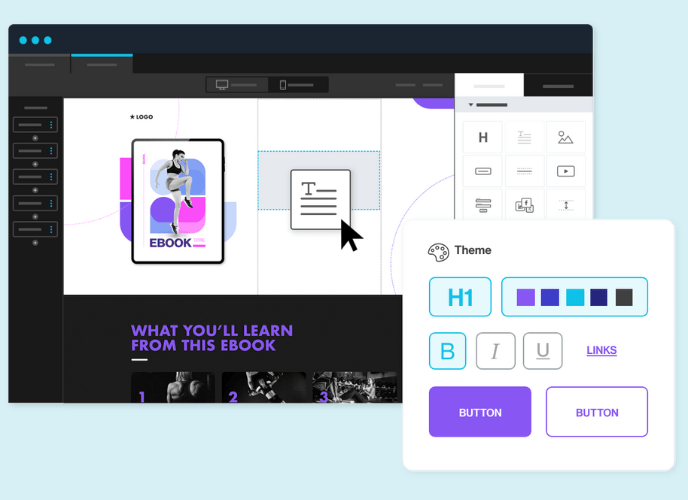
Aside from email marketing, Cyberimpact has been investing in being your go-to platform to integrate email marketing with your overall marketing strategy. In 2024, it launched their landing pages builder. Then in 2026, Cyberimpact launched a dedicated SMTP Relay service for organizations that need dedicated sending infrastructure and want to centralized email marketing and transactional emails in one platform.
Cyberimpact offers free migration support for organizations switching from another platform.
Finally, Cyberimpact’s support team is an award-winning team that is reachable by phone, chat, and email in both of Canada’s official languages.
Which one to choose: Mailchimp or Cyberimpact?
Mailchimp is a capable platform and it works well for plenty of businesses. But if you’re Canadian, care about where your data lives, want CASL compliance built in rather than bolted on, or prefer CAD pricing and local support — the case for a Canadian alternative is straightforward.
FAQ: Mailchimp in Canada
Does Mailchimp charge GST or HST to Canadian users?
Yes. Mailchimp charges applicable Canadian sales taxes (GST/HST) on top of its USD subscription fees. The combination of USD pricing and Canadian sales tax means Canadian businesses typically pay more than the listed price in real terms.
Can I use Mailchimp in French?
Mailchimp’s interface is available in several languages, but its support team operates primarily in English. For Canadian organizations that need French-language support, this is a practical limitation. Cyberimpact is the only major email marketing platform with a fully bilingual platform and support team in both official languages.
Does Mailchimp store data in Canada?
No. Mailchimp stores contact data on US-based servers. For organizations in regulated sectors subject to PHIPA, Quebec’s Law 25, or FIPPA, this may create compliance friction. Cyberimpact and Cakemail are the primary email marketing platforms that host data on Canadian servers.
Does Mailchimp support CASL compliance?
Although Mailchimp provides opt-in and unsubscribe tools, the platform has no consent tracking tools and was not built with CASL as a core design consideration. It does not natively track consent types, implied consent expiry dates, or the audit records a CASL compliance review would require. Canadian senders are responsible for their own compliance regardless of which platform they use — but platforms built for the Canadian market like Cyberimpact make that significantly easier.
What is a Canadian alternative to Mailchimp with CAD pricing?
Cyberimpact is Canada’s leading email marketing platform, with CAD pricing, Canadian data hosting, built-in CASL compliance tools, bilingual support in English and French, and unlimited sends on all plans. Learn more or create a free account here.