

Adding a new channel to your strategy is not easy, and in 2026 more businesses are seeing the value of putting email first. However, yearly goals set up in January can quickly turn into vague goals like “send more emails” or “increase engagement” when you don’t have a clear plan to get there.
If you want to ensure email pays off in 2026, focus on a few core email marketing best practices that have a real impact. You don’t need a full overhaul or a long checklst. Just a few practical actions that help you stay organized, relevant, and consistent.
Here are five areas we recommend you to focus on:
Best Email Marketing Best Practices to Follow
1. Keep Your Email List Clean and Organised
A well-structured contact list makes everything else easier. Over time, it’s normal that contact lists become cluttered, either with outdated segmentation, unclear group names, or contacts that no longer belong where they started.
A messy list makes it harder for you to target campaigns effectively and this can have a negative effect on your engagement. So one of the best email marketing best practices you can follow is keep track of your list health.
To make this process faster (and easier) you can rely more on dynamic segmentation. Instead of manually sorting contacts, use dynamic groups that automatically update based on rules you define, such as signup source, engagement level, or specific interests.
For example, when a new subscriber joins your newsletter, they can automatically be placed into a group based on how they signed up or what they selected in a form. As their behaviour changes, they can move between groups without manual updates. This keeps your list up to date, organized and help your campaigns stay relevant for your audience.
Your next step: Take a few minutes to review your current groups. Can they labelled properly (or are they “new list_April”, “updated list from event”)? Look for groups that are unclear, unused, or outdated. Then, create a new dynamic group with a simple rule such as “sign up date is after January 1, 2026.”
2. Review and Improve Your Automations Regularly
Automation is a life-saver for lean marketing teams who want to do more email marketing. It is also very underutilized.
First, what is marketing automation? It means automating email sending based on certain triggers, such as a new subscription, when someone clicks on a link, opens an email, etc.
Automated email scenarios help you save time and let work happen while you focus on something else, but it is not a one-and-done deal. To run smoothly and continuously deliver good results, an automated sequence needs revisions. A welcome sequence that worked well last year may no longer reflect your current messaging, offers, or audience expectations.
Over time, small changes in behaviour can impact performance without being immediately obvious. That’s why reviewing your automations on a regular basis—quarterly is a good starting point—is an important email best practice.
When reviewing a sequence, it helps to look beyond surface-level metrics and ask a few practical questions:
- Is this content still relevant to new subscribers?
- Are open rates stable, improving, or declining?
- Where do people drop off or unsubscribe?
- Are recipients completing the full sequence?
- What happens to the contact after they go through the sequence?
These insights help you identify where adjustments are needed. For example, if you notice an engagement dip after a specific email, it may be worth revisiting the content or timing of that message. Small updates, like a new subject line or simplifying the call-to-action, can make a big difference.
You can read more here about the best marketing automation best practices.
3. Set Clear and Measurable Goals
“Send more emails” or “increase engagement” may sound like goals, but they don’t give your strategy the necessary guidance. Nor do they help you measure success.
Set a SMART goal for your email marketing strategy: specific, measurable, achievable, relevant and time-bound.
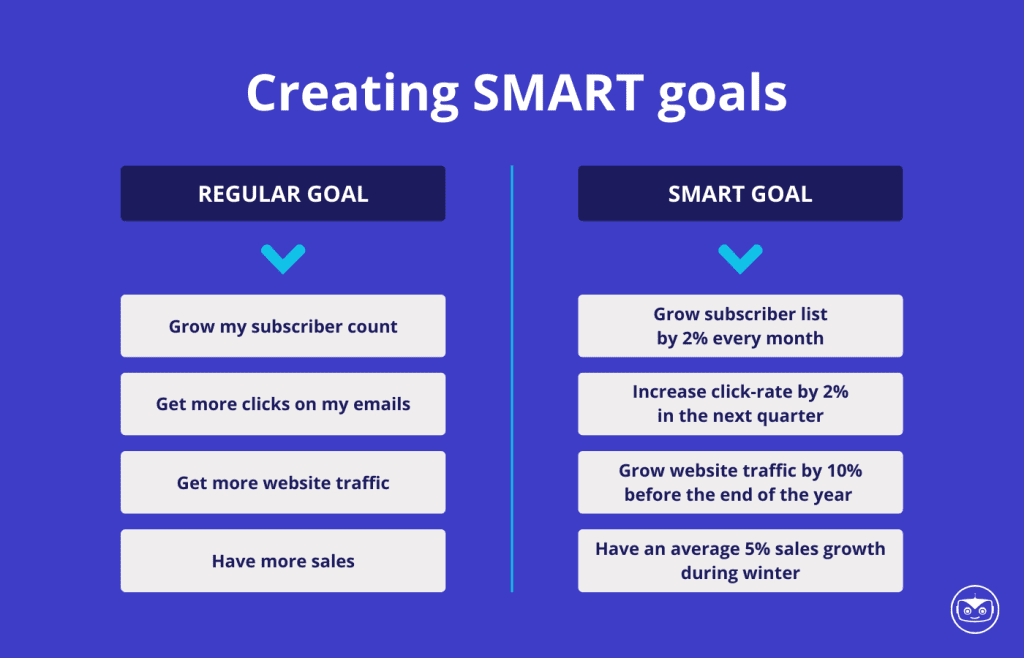
For example, instead of trying to improve everything at once, you might focus on increasing subscribes for a specific initiative or event. Then, improving newsletter engagement to get a better conversion rate.
Having a clear goal changes how you plan your campaigns — it influences the type of content you create, how often you send emails, and your priorities. It also gives you something concrete to evaluate at the end of the period.
4. Revamp Your Forms to Collect the Right Data
Personalization and segmentation depend on having the right data, but that data doesn’t appear on its own. It starts with your subscription forms.
The rule of thumb is that forms should be as short as possible, which is often the right approach. However, not every form needs to collect the same information.
Different forms can serve different purposes. For example, a simple pop-up form might only ask for a first name and email address to reduce friction and encourage signups. On the other hand, a newsletter landing page can include additional fields such as industry, location, or areas of interest so you can more quality first-party data.
This allows you to collect more meaningful data without overwhelming new subscribers. One useful approach is to review your existing forms and identify where small improvements can make a difference. Adding a single question—such as “What are you most interested in?”—can help you better tailor your emails from the start.
In a Canadian context, it’s also important to ensure that your forms align with consent and data collection requirements under CASL and privacy regulations. Clear communication about how data will be used builds trust and supports long-term engagement.
5. Keep Up With Benchmarks and Industry Trends
Benchmarks help you understand how your performance compares to others in your industry and identify where there’s room for improvement. They also highlight broader trends that can influence your strategy, such as changes in engagement, deliverability, or audience behaviour.
According to the most recent edition of the State of Email Marketing in Canada, open rates continue to rise, while click rates are going down. This suggests that while emails are still being opened, users are more intentional about what they engage with.
Understanding these shifts can help you adjust your approach, whether that means refining your calls-to-action, improving segmentation, or revisiting your content strategy.
Download the State of Email Marketing in Canada 2026 to learn the most recent Canadian benchmarks and strategy tips
Conclusion
Improving your email strategy doesn’t require a complete reset. In most cases, focusing on small, consistent improvements will do: cleaning up your list, reviewing one automation, setting a clear goal, adjusting a form, or benchmarking your performance can each have a meaningful impact over time.
The key is to choose one area to work on and build from there. Email marketing continues to evolve, especially in Canada where compliance, data quality, and trust play a central role in performance.
By focusing on a few core practices—list quality, automation, goal setting, data collection, and benchmarking —, you can build a strategy that is both effective and sustainable.
What are email marketing best practices?
Email marketing best practices are proven methods that help improve the performance of your campaigns, such as maintaining a clean contact list, using segmentation, setting clear goals, and optimizing your content based on data.
How often should you send marketing emails?
There is no fixed rule, but most organisations send between 2–4 emails per month. The right frequency depends on your audience, your content, and how consistently you can provide value.
Why is segmentation important in email marketing?
Segmentation allows you to group your audience based on shared characteristics, making it easier to send relevant and targeted messages that improve engagement.
What metrics should you track in email marketing?
Key metrics include open rates, click-through rates, unsubscribe rates, and deliverability. Tracking these helps you understand what’s working and where to improve.
How can you improve your email marketing results?
Focus on a few core areas: keep your list organised, review your automations regularly, set clear goals, collect meaningful data, and benchmark your performance against industry standards.