

One of the most common questions we hear is, “Does email marketing increase sales?” Yes. Email marketing consistently delivers one of the highest returns on investment (ROI), often outperforming paid ads and social media.
For marketing teams, especially in regulated environments like Canada, it becomes a great combination of performance, control, and compliance. It’s important to note that success doesn’t come from just sending more emails. You must send relevant, timely, and targeted campaigns.
Keep reading to learn how to use email marketing for sales with practical strategies designed to help you increase conversions, improve customer retention, and revenue.
How Can Email Marketing Improve Sales
Is Email Marketing Profitable for Businesses?
Yes. Email marketing has always been one of the most cost-effective channels for driving revenue for businesses. Some key advantages of having a consistent email strategy include:
- High ROI: Email averages $42 ROI per US dollar spent
- Owned audience: You don’t rely on algorithms or third-party platforms to reach your audience
- Acquisition and nurturing tool: You can use email to both acquire new leads and nurture existing ones
Where email fits in the sales funnel:
- Top of funnel: Lead capture with free resources, white papers and educational newsletter
- Middle of funnel: Nurturing and trust-building with automated email sequences and segmentation
- Bottom of funnel: Conversion and promotion with targeted campaigns
- Post-purchase: Retention and repeat sales practices with automated sequences and lifecycle strategy mixing email campaigns and SMTP
A robust email strategy that combines single-email campaigns, segmentation practices, and automated sequences is a great asset to an organization’s sales funnel.
How Email Marketing Increases Sales
By delivering the right message to the right person at the right time, email can accelerate sales cycles and improve conversion. Here’s what that looks like with measurable revenue impact:
1. Connect with an engaged audience
With email, you have a direct connection with people who have already expressed interest in your business. You can reach past clients and possible leads alike and send specific marketing initiatives that appeal to each group.
Targeted and relevant email campaigns increase the likelihood of conversion compared to cold outreach.
2. Target the right customers with segmentation
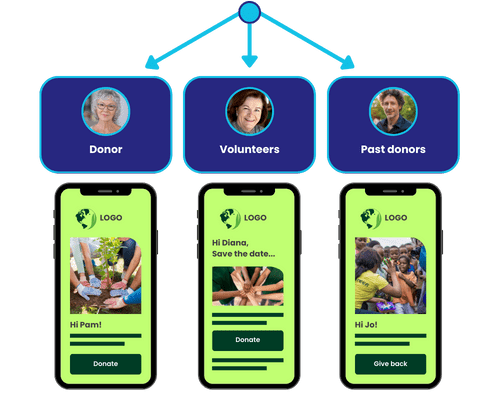
Segmentation is one of the most important elements to make email marketing profitable. Instead of sending the same campaign to your entire list, which can include loyal customers, one-time customers and potential leads, segmentation allows you to group your contacts following certain criteria.
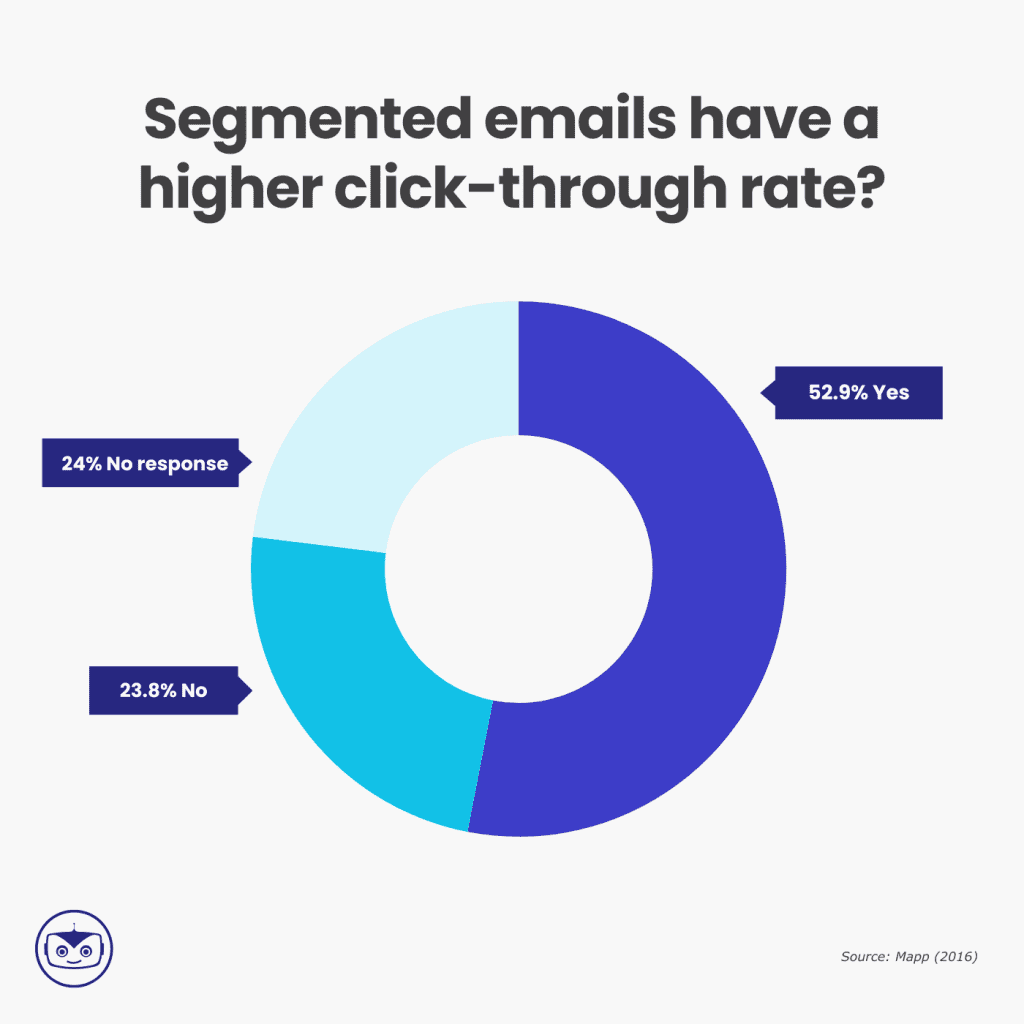
For example, you can create a group based on purchase history, engagement levels (email open rate and click rate), and demographics—clients in Ontario might have different preferences than clients in Quebec or British Columbia.
With email marketing tools like Cyberimpact, you can automate the segmentation process by creating dynamic groups that update automatically when their criteria are met.
How email segmentation increases sales:
- Higher relevance → Subscribers receive offers aligned with their needs and preferences
- Improved conversion rates → Targeted campaigns achieve 3-5x more revenue than general email campaigns (source: Bloomreach)
- Reduced unsubscribe rates → Fewer irrelevant emails mean better list retention and more opportunities to connect and sell to leads and clients
For example, a retailer can send:
- A discount offer to inactive customers
- A loyalty reward for repeat buyers
- Product recommendations based on past purchases
- Keep clients up to date with order notifications
3. Deliver tailored experiences with personalization
The more personalized and relevant you can make the email experience, the greater the impact it’ll have on your sales cycle and on improving revenue. According to McKinsey, 71% of customers expect personalized content and experiences, and 76% get frustrated when they don’t receive that from brands.
However, personalization in email marketing goes beyond using a first name tag. Real personalization means adapting content to each subscriber’s context—that’s why it walks hand in hand with segmentation practices.
Let’s say you run a hotel and you’re planning to send a series of email campaigns to share the next season’s offers. Instead of sending a long list of all offers, you can tailor the recommendations to the contact’s behaviour (booking history, engagement levels) and first-party data, such as interests and preferences.
For past guests, send loyalty offers with a “come and enjoy again” tone. For leads that haven’t stayed with you yet, focus on the most popular options for first-time clients. To guests who have travelled with their family, send family package options and bigger room options.
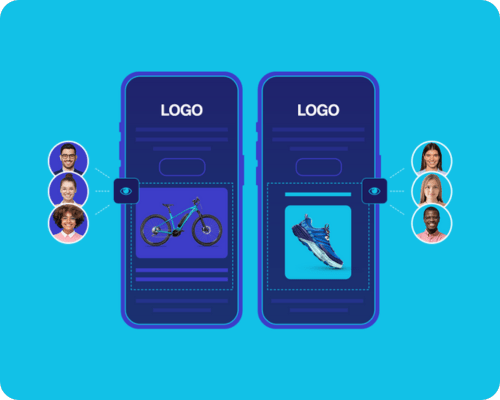
Pro tip: You can do all of this in one email campaign using dynamic blocks, a feature that allows you to customize the visibility of certain email blocks based on a contact’s group, behaviour or preferences.
4. Use email automation to engage at the right moment
Email automation helps you ensure that no sales opportunity is missed. This is a particularly useful tool for lean teams that can’t afford extra active time. An automated email scenario is one or multiple emails that are automatically sent when the trigger is met.
All businesses can benefit from some fundamental scenarios, such as:
- Welcome sequences to new subscribers
- Abandoned cart emails
- Re-engagement campaigns for contacts with low engagement levels
- Post-purchase follow-ups for customer retention
How automation increases revenue for businesses
There are several benefits to using email automations in your email strategy.
It is a great feature for lean marketing and sales teams looking to work smarter, not harder. With a robust email marketing platform, like Cyberimpact, you can automatically segment your audience into groups and create automated sequences for each group, saving time without sacrificing performance.
By sending messages at peak-intent moments — e.g., sending a welcome sequence right after they subscribe to your newsletter — and creating personalized scenarios for specific groups, you can increase engagement and conversion.
5. Retention and repeat purchases
Using email marketing, you don’t stop at the first sale. An email strategy helps you re-engage past customers so they buy again, either by sharing offers or by nurturing the relationship. Retaining customers is more cost-effective than acquiring new ones, so this is a key lever for long-term growth.
How to Use Email Marketing for Sales (Step-by-Step)
1. Build a quality email list
Your email list is the foundation of a profitable email strategy. Beyond email best practices, as a Canadian business, you must comply with the Canadian Anti-Spam Legislation, also known as CASL, and the privacy guidelines (PIPEDA).
Learn more about CASL and its impact on Canadian organizations
To build a list, you can start collecting emails from your current clients and leads. A pro tip to have an ever-growing email list is to have multiple points of entry, i.e. several ways for someone to join your list:
- Have multiple signup forms across your website in key traffic pages, social media profiles, and landing pages
- Create lead magnets that might pique your audience’s interest. Learn more about lead magnets
- Event registrations
2. Segment your audience
Segmentation helps you organize your list and send more relevant campaigns. Instead of treating all contacts the same, you can group them based on:
- Purchase history
- Engagement levels (opens, clicks)
- Lifecycle stage (lead vs customer)
- Location or language preferences (very important if you operated in a national level!)
Segmented campaigns consistently outperform broad campaigns because they match the audience’s intent more closely, creating that personalized experience that consumers expect.
3. Define your sales goal
Before creating a campaign, clarify what you want to achieve. A clear objective helps you align your messaging, targeting, and CTA. The most common goals when using email marketing to increase sales include:
- Promoting a product or service
- Driving seasonal sales
- Increasing repeat purchases
- Re-engaging inactive contacts
4. Create targeted campaigns
Once your goal is defined, build campaigns tailored to each segment. Sending targeted campaigns based on preferences and relevancy to the audience will improve the engagement and conversion.
For example: send a promotional offer to engaged subscribers who have already shown interest in certain products and might be closer to the buying stage. Whereas new leads might have just learned about your brand and are not ready to make a purchase so educational content is the safest bet to keep them engaged and interested.
The more aligned your message is with your audience’s needs, the higher your chances of conversion.
5. Optimize timing and frequency
Timing plays a key role in campaign performance. But finding the right time to send emails is not always easy. First, consider your audiences’s habits — when are they most likely to open and engage with your emails? List a few moments throughout the week you believe would work and then start the testing phase.
You can test:
- Different send times (morning vs afternoon)
- Different days of the week
- Campaign frequency (once a week, bi-weekly, monthly, etc.)
Keep in mind that sending too many emails can lead to unsubscribes, however while sending too few can reduce engagement. So finding the right balance is key.
This structured approach shows how to use email marketing to increase sales in a scalable, measurable, and compliant way.
Email Marketing Tips to Increase Sales
These email marketing tips to increase sales can significantly improve your results, especially when applied consistently across campaigns.
Write compelling subject lines
Your subject line has a big influencer on whether your email gets opened or not. Focus on:
- Clarity over creativity: The most important part of a subject line is to get the message across and set the audience’s expectations.
- Relevance to the segment: Be specific about why your audience should care about the content of the email
- A clear benefit or value: Don’t hold back on the value they’ll find once they open. Be straightforward about the benefits.
Instead of using a general subject line such as “Big sale today,” be specific: “Exclusive 20% discount on orders +50$”
Use clear calls-to-action (CTAs)
Every email should guide the reader toward one specific action. Clear CTAs reduce friction and increase conversions.
Avoid vague CTAs like “click here.” Instead, be specific:
- Shop the collection
- Get your discount
- Join the event
- Download the guide
Focus on benefits, not just features
Your audience wants to know what’s in it for them. Instead of listing features explain how your product solves a problem for them. Highlight outcomes, e.g saving time, increasing efficiency or reducing costs.
Create urgency (strategically)
Urgency can significantly boost conversions when used correctly. You can introduce urgency with specific CTAs such as “limited-time offer” or “get your exclusive deal.” However, use this with moderation. Be honest about what is a true limited-time offer to keep your audience’s trust and your credibility intact.
Optimize for mobile
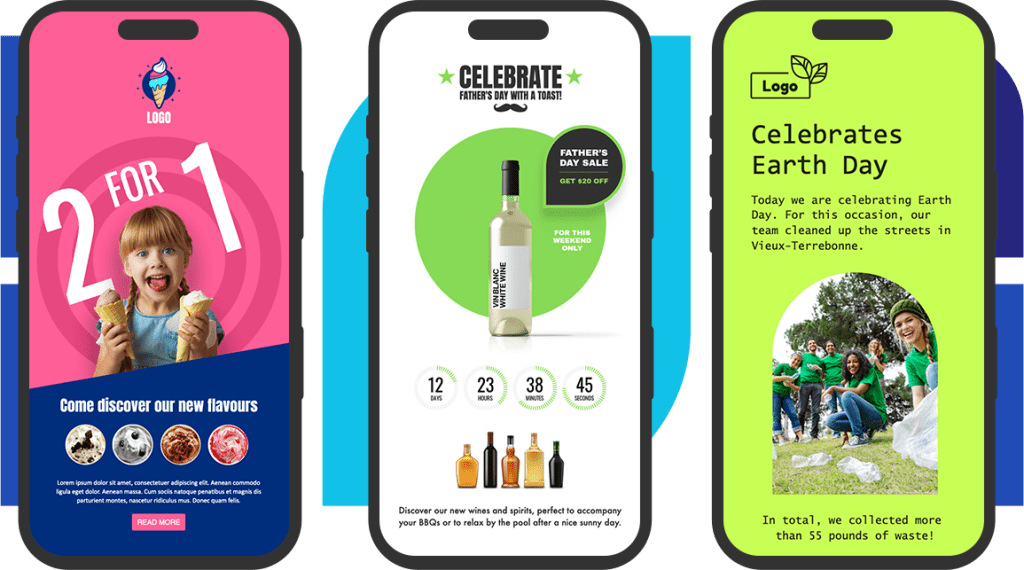
A large portion of your audience reads emails on mobile devices. A poor mobile experience can directly impact your sales performance. A good mobile-friendly email has:
- A responsive design
- The content is easy to scan
- The buttons are easy to click
How Email Marketing Personalization Improves Sales
- It increases engagement: Subscribers are more likely to open and click emails that feel relevant to them.
- It shortens the buying cycle: When content matches a user’s needs, they can make decisions faster.
- It improves customer experience: Personalized emails show that you understand your audience, which builds trust over time.
Examples of personalization in action
- Product recommendations based on past purchases
- Behaviour-triggered emails (e.g., after browsing a product)
- Segmented offers for specific customer groups
Example: Let’s say you manage campaigns for a travel or hospitality business. Instead of sending the same offer to everyone:
- Send loyalty offers to past customers
- Highlight popular options for new leads
- Promote family packages to contacts who previously booked for multiple guests
With tools like dynamic blocks, you can personalize multiple sections within a single email—without creating multiple campaigns.
Campaign Types That Drive Sales
Not all email campaigns are designed to generate revenue—but some are essential for it.
Promotional campaigns
Use this campaigns for:
- Discounts
- Product launches
- Limited-time offers
These campaigns perform best when combined with segmentation and urgency.
Abandoned cart emails
These emails target users who didn’t complete a purchase. They are highly effective because:
- They reach users with strong intent
- They recover otherwise lost revenue
Upsell and cross-sell campaigns
After a purchase, you can:
- Recommend complementary products
- Offer premium upgrades
This helps increase average order value.
Re-engagement campaigns
Over time, some subscribers stop engaging. These campaigns help:
- Win back inactive contacts
- Improve list quality
- Maintain deliverability
Post-purchase follow-ups
After a sale, follow-up emails can:
- Encourage repeat purchases
- Strengthen customer relationships
- Gather feedback
How to Design Email Marketing Campaigns for Seasonal Sales
Seasonal campaigns are one of the biggest opportunities to increase revenue. Here’s how to design email marketing campaigns for seasonal sales effectively:
Plan ahead
Start preparing early for key periods. This gives you time to build and segment your audience and prepare campaigns and automation workflows:
- Black Friday
- Holiday season
- Back-to-school
Build anticipation
Don’t wait until launch day. Prepare ahead so you can great a robust campaign to:
- Tease upcoming promotions
- Offer early access to specific segments
- Create a sense of exclusivity
Use urgency strategically
Seasonal campaigns are ideal for urgency tactics:
- Countdown timers
- Limited-time deals
- Reminder emails
Segment based on past behaviour
Different customers respond differently. For example:
- Reward loyal customers with exclusive offers
- Re-engage inactive users with stronger incentives
- Recommend products based on previous purchases
Increase frequency (carefully)
The Canadian organizations sends about 34 emails per year. During peak periods, you can send more emails—but they must remain relevant. Monitor engagement to avoid fatigue.
Common Mistakes That Hurt Sales
Even strong strategies can underperform if these issues aren’t addressed. Fixing the following mistakes can quickly improve your results:
- Sending irrelevant emails to your entire list
- Over-emailing or not sending enough
- Using weak or unclear CTAs
- Ignoring performance metrics
- Not using segmentation
Conclusion
Email marketing remains one of the most reliable ways to generate revenue. By focusing on segmentation, personalization, and automation, you can build campaigns that consistently drive results.
For Canadian organizations, combining performance with compliance (CASL, PIPEDA) is key to long-term success. Start simple, test what works, and optimize over time—this is how email marketing becomes a sustainable growth channel.
FAQ: How Email Marketing Increases Sales
Is email marketing profitable for businesses in Canada?
Email marketing is highly profitable due to its low cost and high ROI, especially when targeting an existing subscriber base.
How can email marketing increase sales?
It increases sales through segmentation, personalization, automation, and consistent communication across the customer journey.
How to increase sales using email marketing?
Focus on building a quality list, segmenting your audience, creating targeted campaigns, and optimizing based on performance data.
How does personalization improve email marketing sales?
Personalization improves engagement and conversion rates by delivering content tailored to each subscriber’s preferences and behaviour.