
As you’ve probably heard, email marketing is one of the most effective marketing channels for businesses of all sizes, with an average return on investment of 40:1. At the same time, email isn’t a miracle cure. You can’t wave a magic wand and suddenly double your revenue in 30 days.
So the question is: what can you really achieve with a well-executed email marketing strategy? What’s a realistic goal for your business? What kind of return can you expect on your efforts?
In this article, I’ll present four real-world examples of business owners who set goals and used email marketing strategically to reach them (or at least make progress).
Goal example 1: Build customer loyalty
Building customer loyalty means nurturing your relationship with customers after their purchase so you stay top of mind when it’s time to buy again. Essentially, your goal is to increase the average value of a customer, which you can do by increasing purchase frequency or promoting complementary products. The most effective way to do both is, without a doubt, by email.
Real-world example:
The owner of a craft beer store notices that, on average, his customers visit the store every two months. He thinks that if he could raise that average to once a month, it would have a significant impact on his profits.
The goal:
Within the next 6 months, I want my email subscribers to visit my store once a month on average.
The plan:
He creates a newsletter he calls “the VIP club.” From now on, every customer who visits the store will be asked whether they’d like to join. All “VIP” members receive exclusive content and coupons by email once or twice a month.
In the emails he sends to his VIP club members, the business owner does a great job of mixing educational content with promotional offers. For example, he shares an article titled “How to pair food and beer for a truly delicious experience” along with a discount coupon for the beers featured in the article.
The results:
After 6 months of sending newsletters to his VIP customers, the owner pulls the purchase history of all his subscribers to see how often they came by over the past 6 months. 1.5 visits per month! He’s well on his way to reaching his customer loyalty goal!
Goal example 2: Turn more leads into customers
Email is also one of the best ways to nurture leads. Lead nurturing is the art of communicating with a potential customer throughout the different stages of the sales process. Early in their journey, a new prospect might discover your business but not be ready to buy. However, once they’re on your mailing list, you can send them relevant content, information and promotions over time, which will bring them closer to buying.
Real-world example:
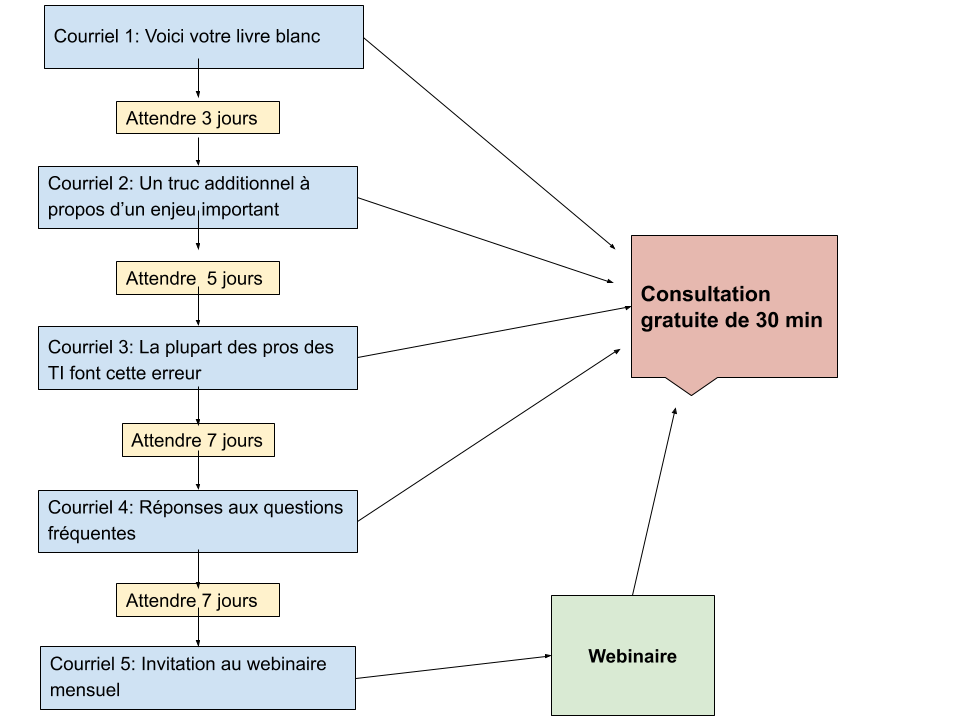
An IT consulting firm offers a free white paper on its website. To get the white paper, people have to fill out a subscription form. When someone fills out the form, they’re added as a lead in the company’s customer relationship management (CRM) tool. A sales rep then contacts them (by phone or email) and offers a free 30-minute phone consultation, usually followed by a quote. Looking at the numbers, the owner sees that only 5% of these leads ultimately become customers. Could they use email marketing to improve that ratio?
The goal:
Within the next 6 months, I want to increase our lead-to-customer conversion rate from 5% to 10%.
The plan:
The best way to use email to nurture leads is with an automated email sequence (also called an automated marketing scenario). Predefined emails are sent automatically at a predetermined pace. Here’s how it works for this consulting firm:
The results:
After 3 months, the business owner reviews the sales funnel in his CRM and sees that his conversion rate over the past 3 months is 8%! It works!
Goal example 3: Improve new user onboarding and engagement
Emails aren’t just for sales or promotions; they can be educational too. Using email during onboarding lets you give your customers all the resources and information they need for a positive experience. For example, you can send them video tutorials or explanations of how to use your product or software.
Real-world example:
The marketing director of a software company (hi, that’s me) notices that when new users complete 3 key actions within 7 days of signing up, they’re twice as likely to become paying customers.
The goal:
Over the next 90 days, I want to increase the percentage of users who complete 3 key actions within 7 days of signing up from 30% to 40%.
The plan:
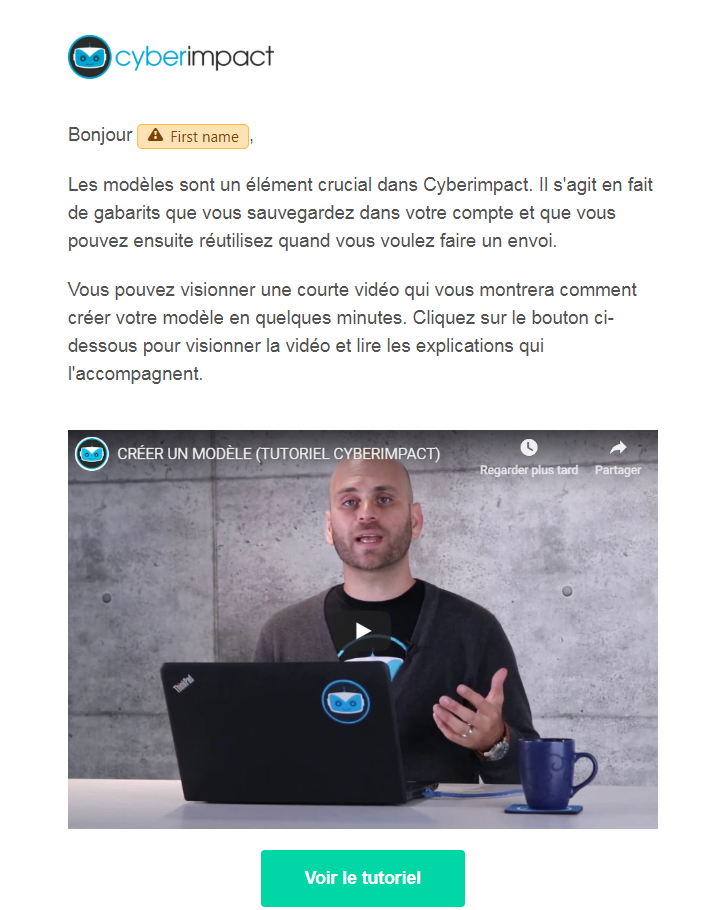
Prepare 3 video tutorials (one for each key action) to send by email if the key action hasn’t been completed.
Three days after a new user opens a free account, the system checks whether they’ve created a template. If not, the user receives the email below. The same process repeats a few days apart for the other two key actions.
The results:
90 days later, here’s what the results of the “New users” campaign look like: 46% of new users completed our key actions. Time to celebrate!
Goal example 4: Boost sales for a limited time
A common use of email marketing is sending one-off, urgent messages to your list during a special promotion. Even though email marketing is much more than that, this classic tactic can still work very well.
Let’s say the owner of the same craft beer store wants to increase sales of a particular product with a limited-time offer.
The goal:
This month, I want to triple sales in the mixology category.
Here are a few tips I gave the business owner for planning his promotional emails.
- Start your email promotion early to build anticipation (a week or more in advance)
- Send several emails (send reminders and a “last chance” email on the final day of the promotion)
- Sprinkle your messages with a sense of urgency
- Make sure your emails are always relevant to your readers (can you segment your list and send different emails?)
The results:
In the week following the campaign, all 3 of our stores were sold out! Sales in this category rose by 400%.
As you can see, you don’t need a complicated email marketing strategy to succeed. Once you’ve set relevant goals and put a plan in place to match, you’ll be able to see your return on investment increase.
Good luck!
P.S. Looking for an email marketing tool to put your strategy into action? Cyberimpact is for you! Create your account.